

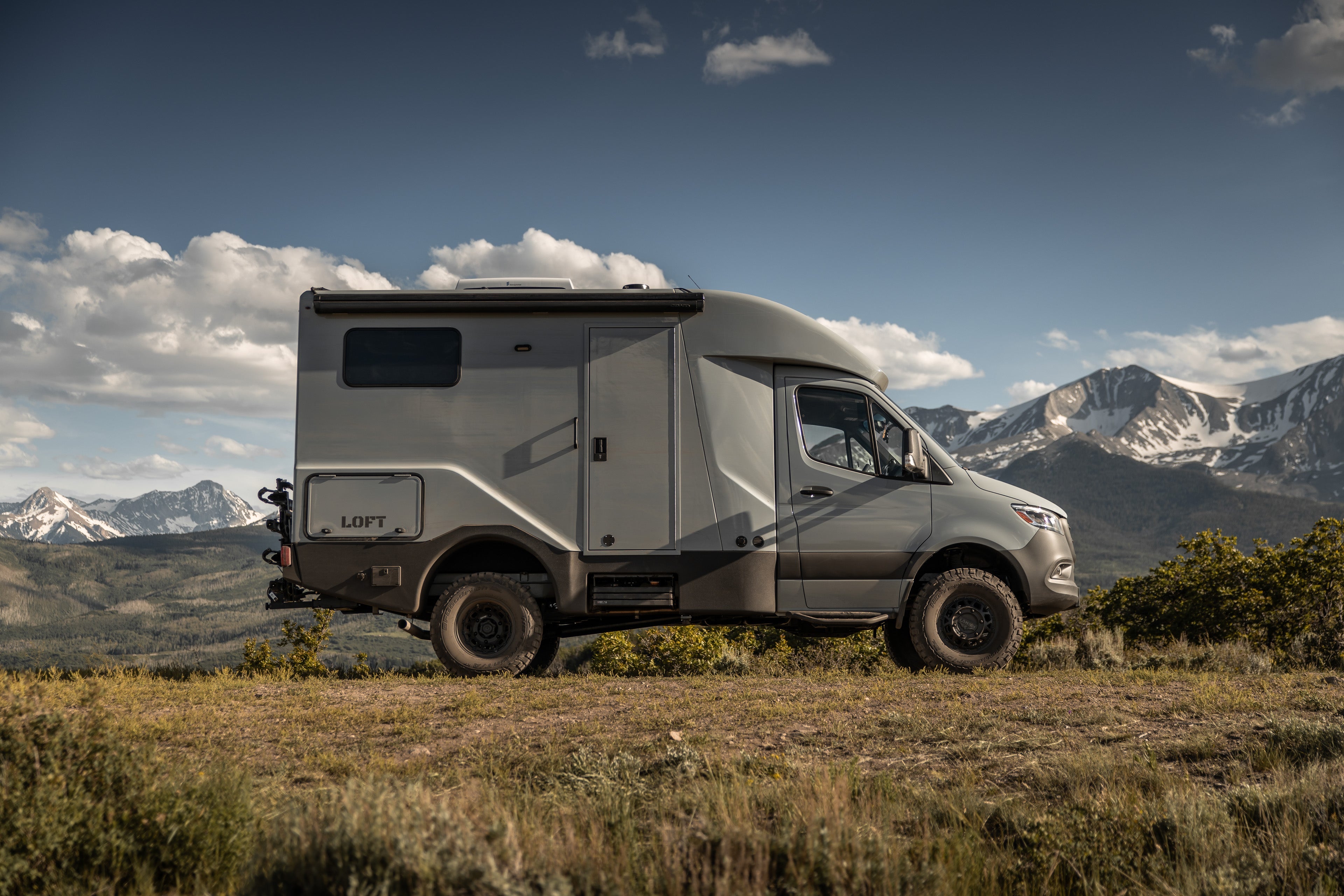
If you're shopping for your first adventure van or truck camper, you've probably noticed two very different ways to buy. Direct-to-consumer brands like Titan Vans, Geotrek, and Noovo sell straight from their website: you put down a deposit, wait for your build, and the van shows up. Rossmönster works differently. We build the rigs ourselves and support you the whole way, and the final purchase happens through a dealer partner rather than a checkout cart.
Both routes get you a van. They don't get you the same experience, and for a first-time buyer the difference shows up exactly where it hurts most: resale value, safety, and what happens when something breaks 900 miles from home.
Here's what to weigh before you decide.
Rossmönster vs. Geotrek at a glance
Geotrek is the direct-to-consumer brand buyers most often compare against Rossmönster, so it's a useful head-to-head. Here's how the two line up on the things that shape ownership, drawn from each builder's own published information as of July 2026.
| Rossmönster | Geotrek Verus | |
|---|---|---|
| How you buy | Built by Rossmönster, sold and serviced through a nationwide authorized dealer network | Direct-to-consumer — ordered online, no dealer markup |
| Platform | Mercedes Sprinter vans; Ford F-350 and Ram 5500 / Ford F-550 truck campers | Mercedes Sprinter 170" |
| Starting price | From $238,871 (Skye) | From $198,775 |
| Third-party certification | RVIA certified; Upfitters Network certified | Not stated on Geotrek's site |
| Service & support | Nationwide dealer network plus the manufacturer | Builder-direct, with a stated 3-year / 36,000-mile warranty |
The buying process differs as much as the price. With a direct-to-consumer builder like Geotrek, you reserve a build online with a deposit (Geotrek lists a $5,000 non-refundable deposit that credits toward a future build), then pay the balance shortly before pickup, with build timelines measured in weeks. It's a lean, efficient path if you're confident in the configuration you want. Buying a Rossmönster runs through a dealer instead, which adds a step but also adds a person who can walk you through options, arrange a test drive, and handle financing and trade-in against real market values. Neither is better in the abstract — they suit different buyers.
The table shows the shape of the choice; the rest of this guide explains why each row matters for a first van.
Resale value: what JD Power says your van is worth later
An RV is a big purchase, and someday you'll sell it or trade it in. When that day comes, both you and the buyer will look at the same number: the JD Power (formerly NADA) value. It's the industry-standard guide for what an RV is actually worth, and it's what lenders, insurers, and dealers use to price a trade-in.
Here's the catch. A build's resale strength depends on having a recognized make and model with a track record, because that's what the JD Power guide tracks. A van that doesn't map cleanly to an established listing can be tougher to appraise, which often means a lower trade-in offer and a slower private sale.
As an established manufacturer, Rossmönster gives you a recognizable rig with a real market history — you can see the full lineup on the compare Rossmönster vehicles page — plus the documentation, build specs, and service records that buyers and appraisers want to see. And because Rossmönster sells through dealers, there's a professional in the loop at trade-in time who values the van against real market data instead of a guess. Clean, well-documented units from known builders hold their value better than heavily modified one-offs, and that paperwork is part of what protects your investment years down the road.
For a first van, that resale strength is real money back in your pocket when you're ready to upgrade.
RVIA compliance: a third party that has your back
This is the one most first-time buyers underestimate.
RVIA certification means an RV meets the standards set by the Recreation Vehicle Industry Association, which align with the ANSI A119.5 code for recreational vehicles. We're talking more than 500 requirements covering electrical, plumbing, propane, fire safety, and structural integrity. RVIA inspectors run thousands of unannounced plant visits every year and walk the production line to spot-check units against those standards.
Why should you care? Because a camper van is a house on wheels with a propane system, a high-output electrical setup, and lithium batteries, all packed into a moving vehicle. Getting that wrong isn't a cosmetic problem. It's a safety problem.
When your van is built to RVIA standards, you're not just trusting the builder's word that everything was done right. You've got an independent third party verifying it. That matters even more in the direct-to-consumer world, where certification varies from builder to builder and the burden is on you to confirm it before you buy. Our guide on how to choose a builder for your custom off-road van covers the questions worth asking. With Rossmönster, that safety bar is built in, not something you have to chase down after the fact.
There's a practical upside too. RVIA-certified units are easier to finance and insure, and many campgrounds and RV parks only accept certified rigs. Buy an uncertified custom build and you may find yourself fighting for a loan, paying more for coverage, or getting turned away at the gate.
Having that certification verified before a van ever reaches you is quality control you'd otherwise have to figure out on your own.
Nationwide service: what happens when something breaks
Here's the scenario nobody wants to picture on delivery day. You're on a trip, something in the electrical or plumbing system quits, and you're hundreds of miles from where the van was built.
If you bought direct from a builder, your support may be that builder, and that builder may be a very long drive away. Some direct-to-consumer brands are excellent about remote troubleshooting, but a phone call only gets you so far when you need hands on the rig.
This is where the Rossmönster model changes the math. Because you buy through a dealer network rather than a single online storefront, you've got more places to get warranty work done and a clearer path when something needs fixing. And Rossmönster stays with you as the manufacturer, supporting you before and long after the sale rather than disappearing once the van is delivered. You get both: a dealer nearby and the people who built your rig standing behind it.
For a first-time owner still learning the systems, having that safety net is the difference between a repair being a minor detour and a trip-ending headache. It's also part of the reason a truck camper or van from an established builder can be simpler to live with — a trade-off we cover in van conversion vs. truck camper build.
Looking for a Rossmönster alternative?
If you found this because you're weighing Rossmönster against other builders, that's exactly the right way to shop. We put together an honest, side-by-side look at how Rossmönster compares to Geotrek, Titan Vans, and Noovo — how each one is bought, priced, and certified — on our Rossmönster alternatives comparison page. It's the fastest way to see where each builder fits before you commit.
And if a specific Rossmönster is on your list, two good places to start are the Loft, our compact Sprinter build, and the Baja series truck campers for genuine off-grid terrain.
The bottom line for first-time buyers
Direct-to-consumer can be a great fit if you know exactly what you want and want to own it for the next decade, you're comfortable being your own project manager, and you have a plan for service and resale. Plenty of experienced RVers go that route happily, and brands like Geotrek and Noovo have their fans.
But if this is your first rig, buying a Rossmönster stacks the odds in your favor in the three places that matter most. You get an established, recognizable build with resale value the JD Power guide accounts for, so your van holds value. You get a rig built to RVIA standards with an independent third party verifying the safety and quality of the work, so you're not taking anyone's word for it. And you get a manufacturer that supports you the whole way, plus a dealer network behind you, so you're covered when you're far from home.
You're not just buying a van. You're buying the peace of mind that comes with it. Come see what a certified, fully supported Rossmönster build feels like, and let's find the rig that fits your first adventure.
Ready to see the difference in person? Reach out to the Rossmönster team and we'll connect you with a dealer near you.
Rossmönster vs. Geotrek: frequently asked questions
Is Geotrek cheaper than Rossmönster?
Generally, yes. Geotrek's Verus starts at $198,775, while Rossmönster's Skye starts at $238,871 and its other Sprinter models run higher. Geotrek keeps the price lower by selling direct-to-consumer with no dealer markup. Rossmönster costs more because it sells through a dealer network and positions itself around dealer service, RVIA-certified builds, and resale value.
What does RVIA certification mean for buyers?
RVIA certification means an independent body has verified the build against the RV Industry Association's standards, which align with the ANSI A119.5 code — more than 500 requirements covering electrical, plumbing, propane, fire safety, and structure. Certified rigs are also typically easier to finance and insure, and some campgrounds only accept them. Rossmönster states its builds are RVIA certified; it is worth confirming where any builder you consider stands.
Can I see a Rossmönster before buying?
Yes. Because Rossmönster sells through a nationwide authorized dealer network, you can arrange a test drive and a hands-on walkthrough in person before committing. Direct-to-consumer builders like Geotrek are generally ordered online, so an in-person look can be harder to arrange.
Which holds its resale value better?
Resale strength depends largely on whether a build maps to a recognized make and model in the JD Power (formerly NADA) guide, which lenders and dealers use to price trade-ins. An established, dealer-distributed brand with clear documentation gives appraisers a transparent reference. Heavily modified one-offs can be tougher to appraise, which often means lower offers.
What are the main alternatives to Rossmönster besides Geotrek?
The builders most often cross-shopped with Rossmönster are Geotrek and Noovo (both direct-to-consumer) and Titan Vans (a conversion builder). You can see all of them compared side by side on the Rossmönster alternatives comparison page.
Share:
Rossmönster Expands Southeast Footprint with Sunshine State RV Partnership